Les Johnson – Visions of the Future

Home
Les Johnson is a husband, father, physicist, and author of science fiction / science fact. His latest non-fiction book about the new wonder material, Graphene, was reviewed in Nature, excerpted in American Scientist and Salon.Com. His next novel, Saving Proxima, with co-author Travis Taylor, will be released by Baen Books in hardcover in the summer of 2021. In his "day job" he works in the Science and Technology Office at the NASA George C. Marshall Space Flight Center in Huntsville, Alabama where he serves as the Solar Sail Principal Investigator for NASA's first interplanetary solar sail mission, the Near Earth Asteroid Scout and the Principal Investigator of the Solar Cruiser mission.
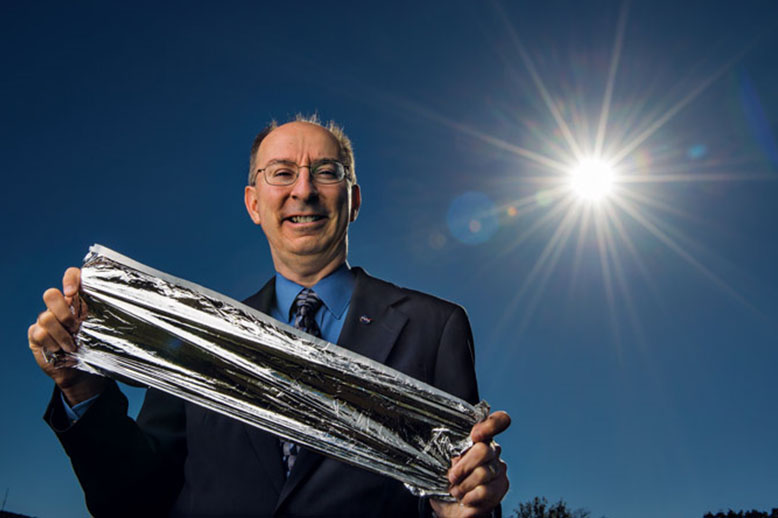
Les is seen here holding a sample of solar sail material that may one day be used to send a spacecraft deep into the outer solar system using only the pressure of sunlight for propulsion.
SF and science fact from a universe of great storytellers and scientists - now on sale!


Click here to read an excerpt.
Science Fiction from Baen
and Science Fact from Prometheus

PUBLISHER'S WEEKLY says about Mission to Methone:
"The spirit of Arthur C. Clarke and his contemporaries is alive and well in Johnson’s old-fashioned first-contact novel, set in 2068. After Dr. Chris Holt discovers an anomalous object in the solar system, he is swept into a multinational mission, first to the artifact and then to Saturn’s tiny moon Methone, where alien intelligences dwell. The aliens, drawn to both his knowledge of science and his “difference in thinking” (clearly described but never named as autism), deliberately select him as the human ambassador and teach him about the ancient makers and destroyers who roam the universe to support or obliterate sentient life. Humans, on edge from the discovery of extraterrestrial life, may end up doing the destroyers’ work for them... Johnson, a NASA space scientist, includes plenty of realistic detail and puts fun new spins on familiar alien concepts... There’s a great deal here for fans of early hard SF." (Feb.)—Publishers Weekly
THE JOURNAL NATURE about Graphene:
"How can a material one atom thick conduct electricity or filter filthy water? Physicist Les Johnson and chemist Joseph Meany tell all about graphene, that wispy “tessellation of carbon atoms” finally coming into its own. Their primer is fittingly slim, but covers an impressive swathe of the science and its applications. Along with a lucid history of earlier carbon “miracle materials”, they follow the path from lab to production. The potential is vast, from making the material using waste carbon dioxide harvested from astronauts’ breath, to creating graphene-based transistors that detect harmful genes." (Jan.) - Nature
Order your copies today:
Graphene: The Superstrong, Superthin, and Superversatile Material That Will Revolutionize the World

Order your copies today!
Les's Popular Science Non-Fiction
Order your copies today!
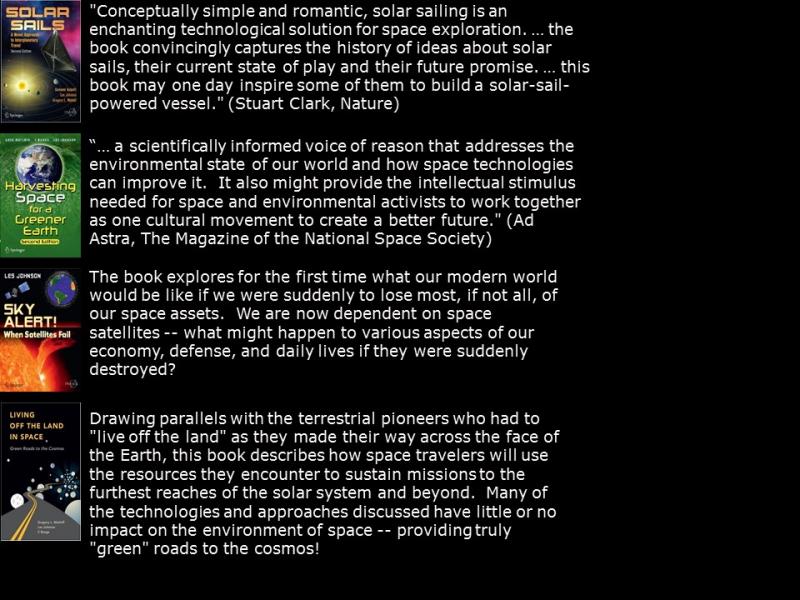
Solar Sails: A Novel Approach to Interplanetary Travel
Harvesting Space for a Greener Earth
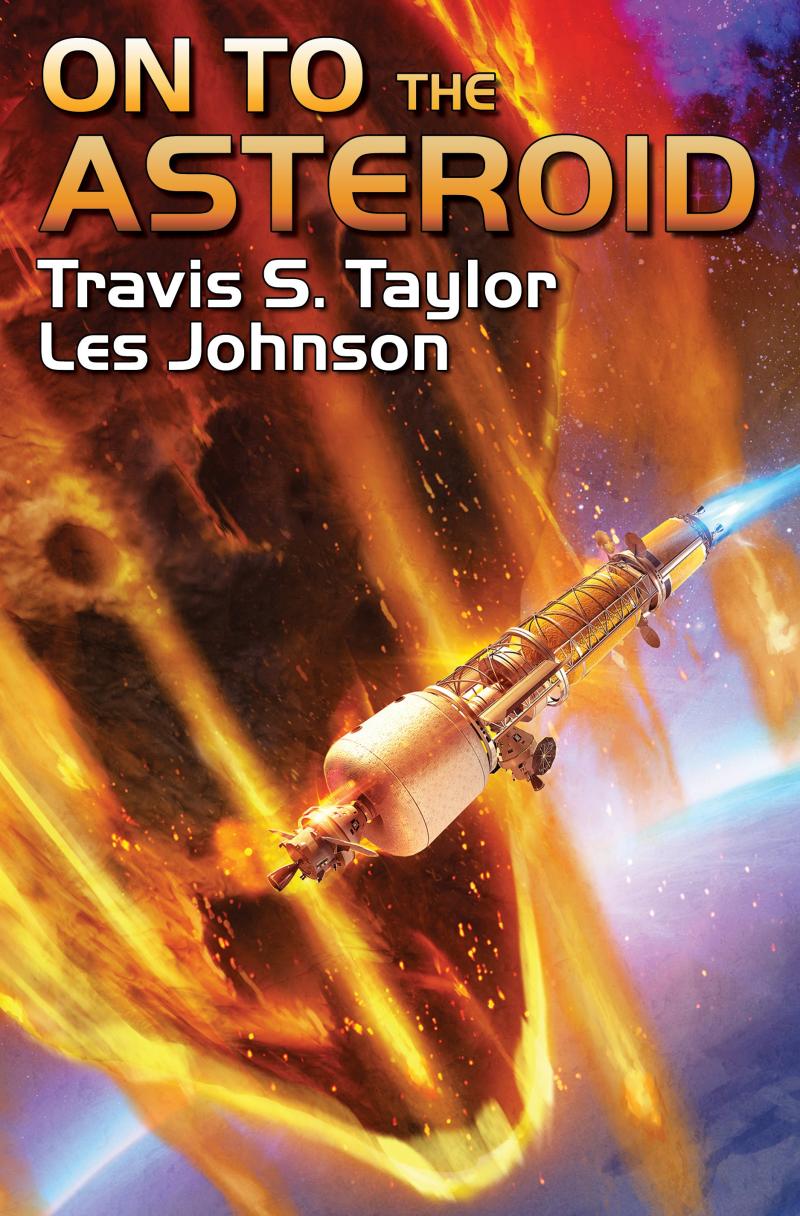
On to the Asteroid
Travis Taylor & Les Johnson
It's the beginning of a new golden age of space exploration. Finally, humanity is taking the commercialization of space to the next level—mining asteroids. The new gold rush of the commercial space era has begun.
Another commercial venture, an attempt to put a hotel on the Moon, is seeking the space tourism gold of the ultra wealthy. And it seems as if the dream of sending people to Mars is finally going to happen using a ship propelled by a powerful nuclear rocket.
But space travel isn’t cut and dry, and there is nothing routine about it. In order to mine an asteroid the goal is to bring it closer to Earth, but orbital mechanics are tricky and close to Earth proves to be far too close for comfort—with looming destruction from space about to become a grim reality. Now astronauts, scientists, engineers, and people in all the burgeoning space businesses must team together to stop the asteroid before it is too late for humanity and the planet it calls home.
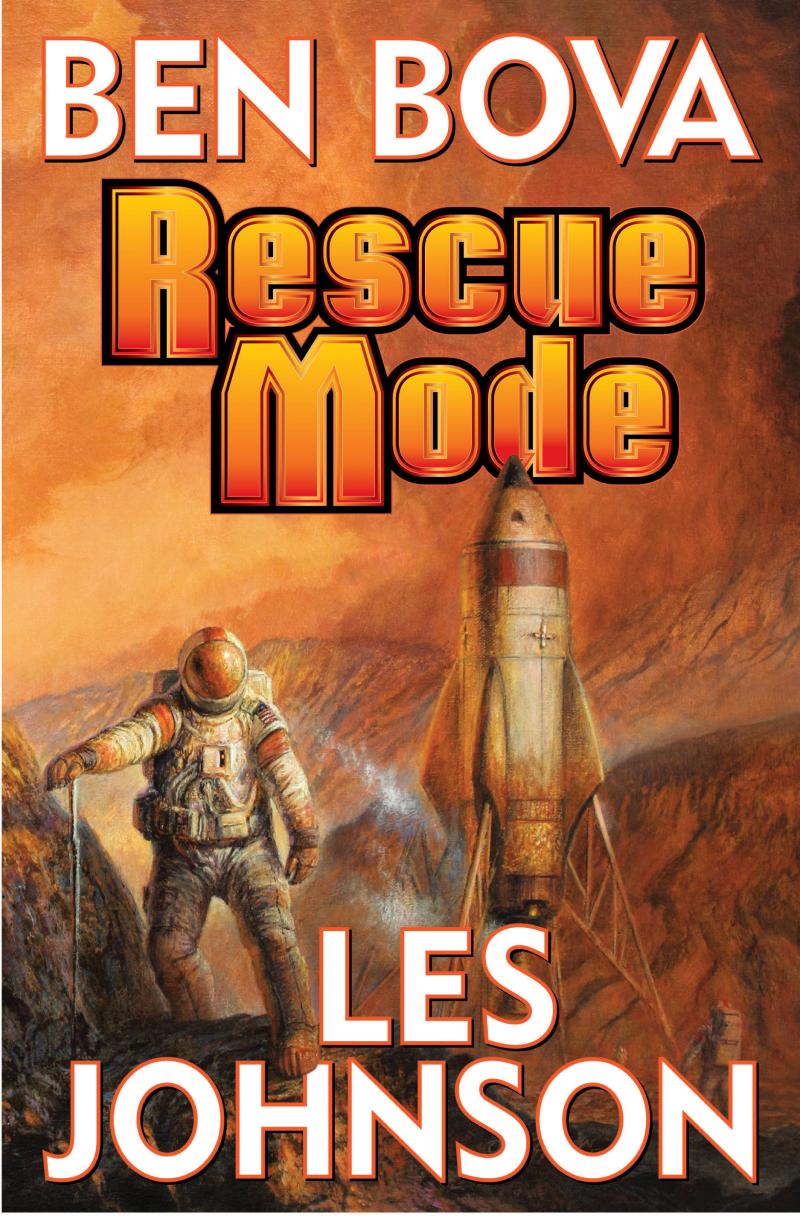
Rescue Mode
Ben Bova & Les Johnson
Booklist says Rescue Mode is "... a suspenseful and compelling narrative of the first human spaceflight to Mars." And, "…the narrative highlights many positive aspects of human nature, including the wonders of innovation in stressful situations and the fierce will to survive despite impossible odds."
The first human mission to Mars meets with near-disaster when a meteoroid strikes the spacecraft, almost destroying it. The ship is too far from Earth to simply turn around and return home. The eight-person crew must ride their crippled ship to Mars while they desperately struggle to survive.
On Earth, powerful political forces that oppose human spaceflight try to use the accident as proof that sending humans into space is too dangerous to continue. The whole human space flight program hangs in the balance. And if the astronauts can’t nurse their ship to Mars and back, the voyagers will become either the first Martian colonists—or the first humans to perish on another planet.
Harvesting Space for a Greener Earth
Greg Matloff, C Bangs and Les Johnson
A space-based solution to the pressing energy and environmental problems facing humanity.

Sky Alert: When Satellites Fail
Les Johnson
The book explores for the first time what our modern world would be like if we were suddenly to lose most, if not all, of our space assets. We are now dependent on space satellites -- what might happen to various aspects of our economy, defense, and daily lives if they were suddenly destroyed?
"Vital underpinnings of the global economy and U.S. national security, satellites are assets all too easily overlooked despite their constant presence overhead; this book seeks to spare us all the experience of appreciating them fully only through their loss." Checkout the Pittsburg Tribune's complete review of Sky Alert here.

Released March 31 2013 by Springer Books. The book is available from: Amazon, Barnes & Noble, or a book seller near you.
Going Interstellar Les Johnson and Jack McDevitt
"Exploration and discovery are alive and well in current science fiction. Jack McDevitt, a Nebula winner who needs no introduction in these pages, joins with Les Johnson, Deputy Manager of NASA’s Advanced Concepts Office, to bring us eight short stories and four nonfiction articles, all based on the best current physics ideas for travel between the stars. Analog readers will feel particularly comfortable in this volume.
First, the nonfiction. Dr. Gregory Matloff, a retired astronomy professor with a list of credentials that itself stretches halfway to the Moon, discusses antimatter starships in one article and fusion drives in another. Dr. Richard Obousy describes a proposal called Project Icarus, a real-world design study for an interstellar spaceship. Finally, Les Johnson gives the lowdown on solar and beamed energy sails.
The roster of SF writers is equally impressive, including such familiar names as Michael Bishop, Ben Bova, Sarah A. Hoyt, Jack McDevitt, and Mike Resnick, as well as relative newcomers Dr. Charles E. Gannon, Les Johnson himself, and Louise Marley.
All of the stories are enjoyable." ANALOG MAGAZINE (Jan 2013)
"Thinking about distant futures has often been categorized as ‘science fiction’ or the now more-popular ‘speculative fiction.’ Either way, this body of literature has faced twin perils. On the one hand, stories focusing on the technologies of human space colonization feel detached and inhuman because, of course, those technologies are only tools for the larger project of dispersing humanity from Earth. On the other hand, stories focusing on the human domain of space colonization can feel like a cop-out, ignoring the massive technical issues to replay ancient dramas of human relationships. Combining both elements to make a story that feels technically realistic but does not ‘lose’ humanity is a tall order.
Many of the stories in Going Interstellar fill that order. And as a bonus, the volume includes a number of exciting and clarifying popular-science essays on the technologies needed for dispersing humanity far out from Earth." SCIENTIFIC AMERICAN BLOG (June 15, 2012)
Some humans may be content staying in one place, but many of us are curious about what’s beyond the next village, the next ocean, the next horizon. Are there others like us out there? How will we reach them? Others are concerned with the survival of the species. It may be that we have to get out of Dodge before the lights go out on Earth. How can we accomplish this?
Wonderful questions. Now get ready for some answers.
Here is the science behind interstellar propulsion: reports from top tier scientists and engineers on starflight propulsion techniques that use only means and methods that we currently know are scientifically possible. Here are in-depth essays on antimatter containment, solar sails, and fusion propulsion.
And the human consequences? Here is speculation by a magnificent array of award-winning SF writers on what an interstellar voyage might look like, might feel like—might be like. It’s an all-star cast abounding with Hugo and Nebula award winners: Ben Bova, Mike Resnick, Jack McDevitt, Michael Bishop, Sarah Hoyt and more.
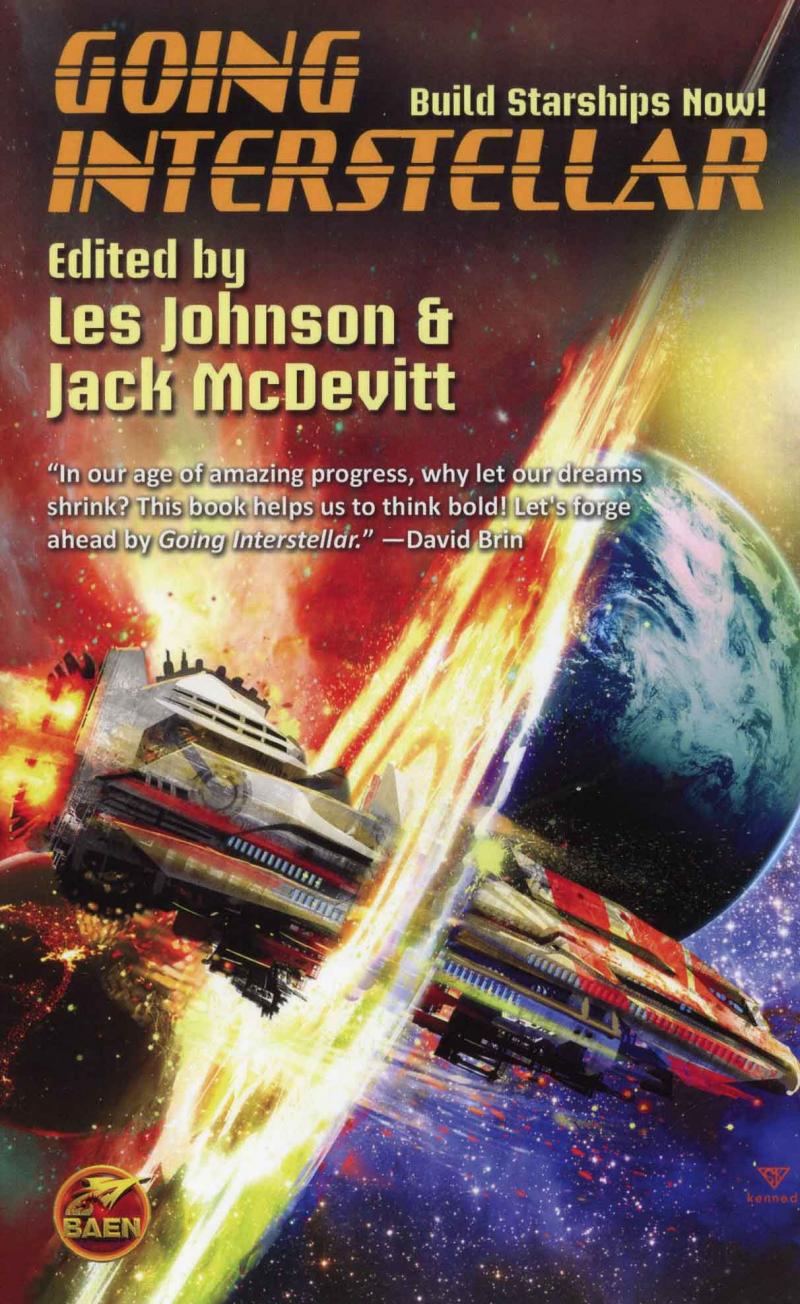
Released June 2012 from Baen Books. You may purchase an autographed copy from Leslie's Good Books in Amazon Marketplace. The book is also available from: Amazon, Barnes & Noble, or a book seller near you.
Back to the Moon Travis Taylor and Les Johnson
"For everyone who felt a shiver at Lovell's words on that long-ago Christmas, or who held their breath until Apollo 13 emerged from the far side; for everyone whose heart skipped a beat at Armstrong's first step and who still believes that July 20, 1969 was the greatest date in history -- Back to the Moon is a reminder of a lost era." ANALOG (May 2011)
----------------------------------
Decades after the last footprints were left on the Moon, the U.S. was preparing to return to the Lunar surface in a new class of rockets, when the mission suddenly became much more urgent. It would have to be a rescue mission.
Unbeknownst to the rest of the world China had sent its own Lunar expedition. A manned expedition. Until a distress call was received, no human outside of China even knew that the mission was manned—or that their ship had crash-landed and couldn’t take off again.
Time was running out, and if the four Chinese astronauts were to be rescued, the American lunar mission would have to launch immediately, with a only a skeleton crew. Once the heroic U.S. astronauts were underway the army of engineers and scientists back home had the daunting task of deciding what equipment could be left on the Moon to permit the lunar landar to lift safely from the Moon with the two U.S. astronauts and the four stranded Chinese taikonauts! Could the U.S. mount such a mission succesfully—and would thousands of years of instilled honor “allow” the Chinese astronauts to accept a rescue?
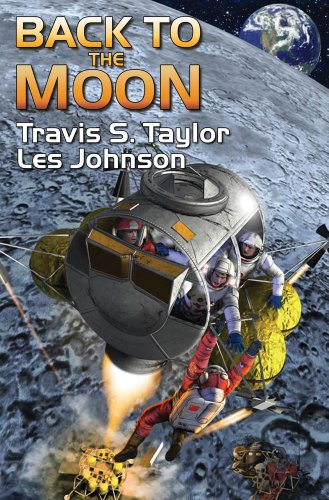
Published December 2010 by Baen Books. You may purchase an autographed copy from Leslie's Good Books in Amazon Marketplace. The book is also available from: Amazon, Barnes & Noble, or a book seller near you.
Paradise Regained: The Regreening of Earth Les Johnson, Gregory Matloff and C Bangs
The environmental challenges facing humanity today are too serious to be resolved only by conservation and current technologies. Rather than losing heart, we need to recognize that the answer to these problems lies in the development of space. Not only will extraterrestrial resources avert a crisis, but they will also provide the basis for continued technological and societal progress. The resources of the Solar System will help us meet our projected industrial needs. Space-based power generation systems will work synergistically with Earth-based conservation. Paradise Regained shows how environmentalists and space advocates can work together to achieve a common goal -- the regreening of planet Earth.

Published in December 2009 by Praxis & Springer/Copernicus. You may purchase an autographed copy from Leslie's Good Books in Amazon Marketplace. The book is also available from: Amazon, Barnes & Noble, or a book seller near you.
WHAT THE REVIEWERS ARE SAYING:
"Paradise Regained ... is a scientifically informed voice of reason that addresses the environmental state of our world and how space technologies can improve it. It also might provide the intellectual stimulus needed for space and environmental activists to work together as one cultural movement to create a better future." (Ad Astra, The Magazine of the National Space Society, Spring 2010.)
“The daily news is full of global climate change stories. … This book is a welcome addition to the discussion - one that focuses on the prospect that space can be a restorative ingredient to Earth’s future. … There’s a very helpful chapter-by-chapter summary at the start of this book - making this book all the more acce